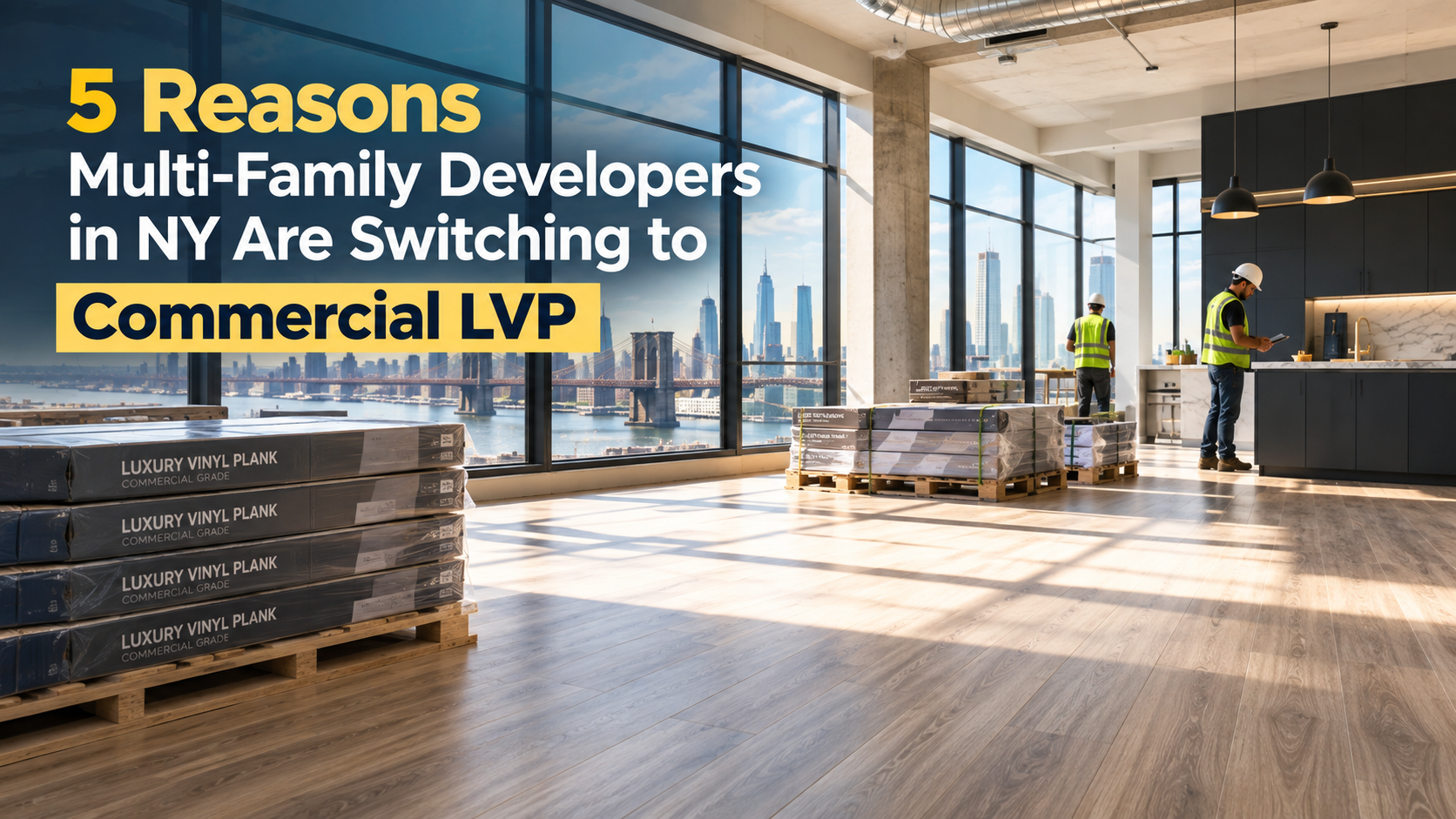
When developing a multi-family property or outfitting a large-scale rental portfolio in New York, the flooring you choose dictates your long-term ROI. Go too cheap, and you’ll be replacing it every time a tenant moves out. Go too expensive with traditional solid wood, and your upfront costs—and maintenance headaches—will skyrocket.
This is exactly why high-volume developers and property managers across the five boroughs are abandoning traditional materials and standardizing Commercial Luxury Vinyl Plank (LVP). If you are currently bidding on a multi-family project, renovating a rental portfolio, or designing an office space, here are the top reasons why commercial-grade LVP from a dedicated wholesale supplier is the smartest investment you can make.
1. 100% Waterproof: The Ultimate Tenant-Proofing
Water damage is the number one enemy of rental properties. A tenant leaving a window open during a Brooklyn rainstorm, an overflowing sink in a Queens high-rise, or an old radiator leaking over a weekend can completely destroy a traditional hardwood or laminate floor, requiring thousands of dollars in remediation.
- Complete Core Protection: Premium commercial LVP and SPC (Stone Plastic Composite) rigid core flooring are 100% waterproof. The planks will not swell, buckle, or warp when exposed to standing water.
- Seamless Design: Because it is waterproof, you can install the exact same beautiful wood-look floor continuously from the living room directly into the kitchen and bathrooms without a single transition strip.
2. Unmatched Scratch and Dent Resistance
In a multi-family building, floors take a severe beating. From tenants dragging heavy couches across the room on move-in day to large dogs running down the hallways, soft woods like pine or standard engineered oak will show scratches immediately.
- Commercial Wear Layers: LVP is manufactured with an ultra-tough commercial wear layer. For rental properties, developers should look for 20-mil to 28-mil wear layers to prevent gouges.
- Polyurethane Finishes: The surface is often finished with a ceramic bead or UV-cured polyurethane coating, making it virtually impervious to pet claws, dropped items, and heavy foot traffic.
3. Lightning-Fast Installation Turnovers
Time is money. Every day a unit sits empty during a renovation is a day of lost rental income. Unlike tile, which requires mortar and curing time, or nail-down hardwood that requires heavy tools and subfloor prep, modern click-lock LVP can be floated directly over most existing hard surfaces (provided they are flat and structurally sound). A skilled flooring contractor can often finish an entire 2-bedroom NYC apartment in a single day, drastically accelerating your construction schedule.
4. Surgical, Low-Cost Repairs
If a tenant manages to inflict severe damage on a solid hardwood floor, fixing it often requires sanding, patching, and refinishing the entire room to ensure the stain matches. With LVP (especially glue-down variants), repairs are surgical.
- Heat and Replace: A maintenance worker can apply heat to the damaged glue-down plank, lift it out, roll down fresh adhesive, and drop a new one into the exact same spot in under ten minutes.
- Attic Stock: By keeping just a few extra boxes of your wholesale order in the building’s storage room, you guarantee zero-stress, perfectly matched repairs for the next decade.
5. Authentic Hardwood Aesthetics
Thanks to advanced Embossed-In-Register (EIR) texturing technology, today’s commercial LVP looks and feels identical to premium European white oak or rustic hickory. The texture perfectly aligns with the printed wood grain, fooling even the most discerning prospective luxury renters. You get the premium valuation and aesthetic appeal of a luxury building, but at a fraction of the wholesale cost of real timber.
6. Source Your LVP in Bulk with a Trade Partner
When you are outfitting a 50-unit building, you cannot rely on boutique retail showrooms. You need a B2B wholesale partner who stocks commercial LVP in massive quantities and can deliver pallets directly to your NYC job site on your schedule.
Frequently Asked Questions (Trade FAQs)
1. What is the difference between SPC and WPC vinyl flooring?
SPC (Stone Plastic Composite) uses a rigid limestone core, making it ultra-durable and highly resistant to dents from heavy furniture. WPC (Wood Plastic Composite) is slightly softer underfoot and warmer, but less dent-resistant. We recommend SPC for commercial and multi-family applications.
2. Do I need an underlayment with commercial LVP?
Many premium SPC floors come with a pre-attached 1mm or 1.5mm IXPE acoustic pad. However, if you are installing in a multi-story NYC building, you may need an additional secondary rubber or cork underlayment to meet the co-op’s IIC acoustic rating requirements.
3. Is glue-down or click-lock LVP better for rentals?
Glue-down LVP is the standard for high-traffic commercial spaces and rentals because it allows for surgical plank replacement if a tenant gouges the floor. Click-lock is faster to install and better for hiding minor subfloor imperfections.
4. How flat does my subfloor need to be for LVP?
Rigid core SPC is forgiving, but industry standards generally require the subfloor to be flat within 3/16 inch over a 10-foot radius. Floor prep and leveling are crucial to prevent the clicking mechanisms from separating under load.
5. How can developers secure bulk pricing on large LVP orders?
By opening a direct Trade Account with a wholesale supplier like Woodcraft Flooring NY. We bypass retail markups, allowing developers to purchase high-volume commercial LVP at significant discounts.