If you are outfitting a 50-unit multifamily rental building in Queens, a medical practice in Midtown, or a busy retail storefront in Downtown Brooklyn, waterproof commercial vinyl plank flooring is almost certainly at the top of your specification list. Modern luxury vinyl delivers the warmth and texture of natural hardwood without the moisture vulnerability, high maintenance costs, or premium price tag of solid timber.
Article Overview: What You Will Learn
This commercial guide demystifies the alphabet soup of resilient flooring: LVP, LVT, SPC, and WPC. We compare core densities, static point-load dent resistance, wear layer benchmarks, glue-down versus click-lock installation methods, and acoustic dampening across multi-story New York buildings.
The confusion starts when suppliers throw around industry acronyms without explaining how they behave under real-world abuse. Which core resists moving dollies, office chairs, and pet claws, and which one leaves you dealing with dented planks and angry property managers? For developers planning multi-unit rollouts, combining the right core with bulk orders for multifamily projects is how you maximize long-term return on investment. Here is the contractor’s breakdown.
1. Understanding the Cores: SPC vs. WPC vs. Traditional LVT
While all resilient vinyl planks feature a clear polyurethane wear layer and a high-resolution decorative wood print film, what sits between the print film and the subfloor dictates how the floor performs under commercial foot traffic and heavy rolling loads.
SPC: Stone Plastic Composite (Rigid Core)
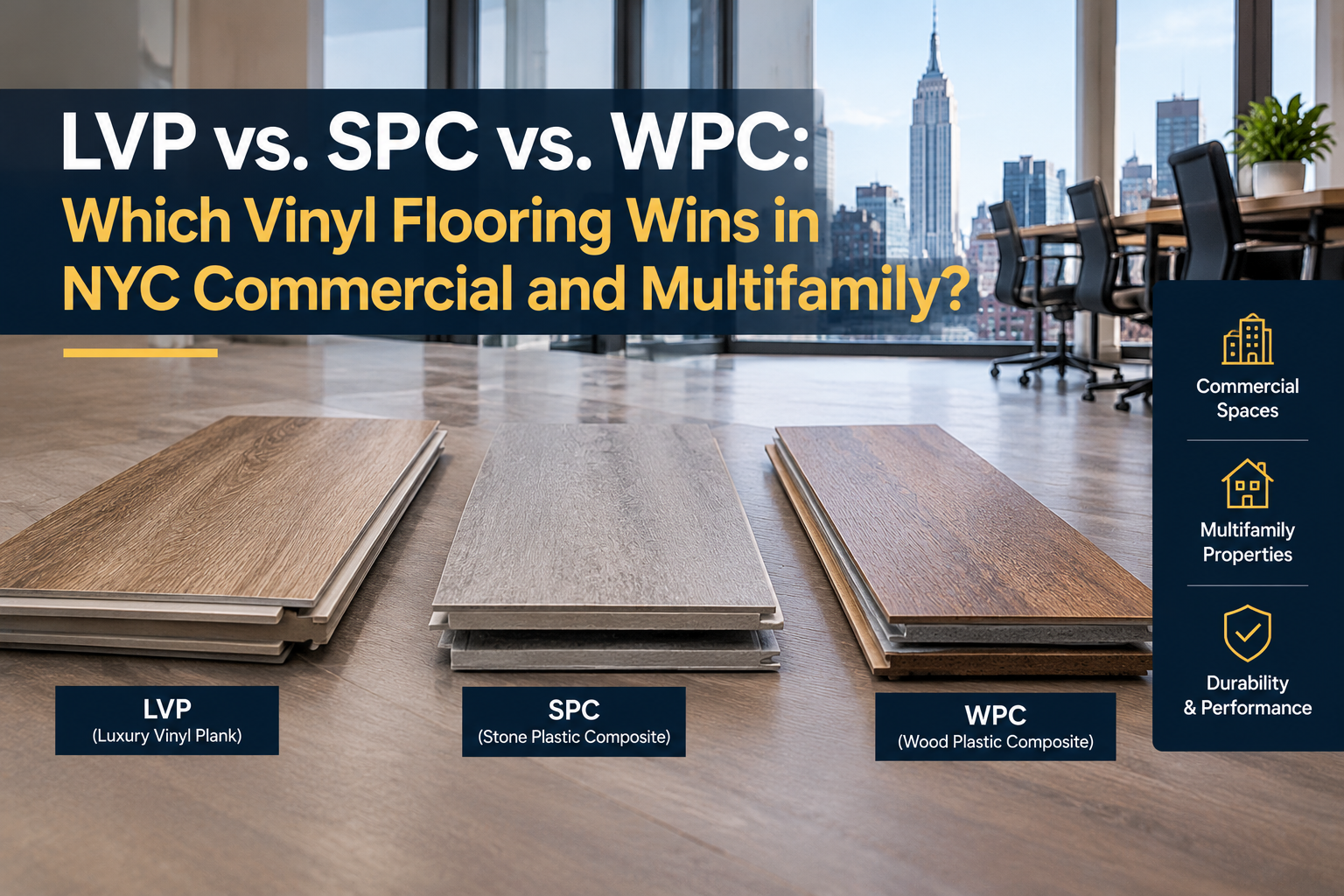
SPC core is manufactured by blending natural limestone powder (calcium carbonate) with polyvinyl chloride and stabilizing polymers under intense heat and pressure. The resulting core is stone-hard, completely rigid, and contains zero chemical foaming agents. It offers unmatched static load limits, often exceeding 2,000 PSI, meaning high heels and heavy furniture will not leave permanent indentations. In addition, its minimal thermal expansion ensures planks will not buckle in high-rise apartments with floor-to-ceiling sun exposure.
WPC: Wood Plastic Composite
WPC core incorporates recycled wood pulp, thermoplastic, and a chemical foaming agent that injects microscopic air bubbles into the composite during extrusion. This creates a thicker, lighter, and softer plank. While it feels warmer and more comfortable underfoot, the microscopic air pockets make it vulnerable to heavy commercial point loads. Heavy credenzas, medical equipment, or pallet jacks can permanently compress the core, leaving visible dents.
Traditional Flexible Glue-Down LVT
Unlike click-lock rigid planks, traditional commercial LVT is a solid 2.5mm or 3.0mm virgin vinyl plank adhered directly to a prepped, flat concrete slab using commercial pressure-sensitive adhesive. Because every square inch is bonded directly to the slab, rolling gurneys and delivery dollies cannot pop locking joints.
2. The 20-Mil Rule: Why Wear Layer Matters More Than Total Thickness
A common rookie mistake on commercial bids is evaluating a vinyl floor solely by how thick the total plank feels in your hand. A 7mm plank with an 8-mil residential wear layer will look worn out in 18 months, whereas a 5mm plank with a 20-mil commercial wear layer will easily last 15 years in a rental property.
Trade Specification Rule: Never install anything under a 20-mil (0.50mm) wear layer for New York multifamily rentals, co-working suites, or retail spaces. For heavy commercial corridors, high-traffic elevators, or healthcare clinics, step up to a 28-mil (0.70mm) wear layer with ceramic bead or aluminum oxide reinforcement.
The wear layer protects the decorative image film from abrasion, ultraviolet fading, and surface scratching. Top-tier commercial vinyl planks also incorporate an ultraviolet-cured ceramic bead coating that resists scuffs from black rubber soles and provides high stain resistance against food spills and harsh cleaning chemicals.
3. Glue-Down vs. Click-Lock: The High-Traffic Corridor Test
Choosing between floating click-lock SPC and full-spread glue-down LVT comes down to the specific traffic patterns and operational goals of your project:
Click-Lock SPC (The Fast-Turnaround Solution): Click-lock rigid core floating floors are ideal for residential apartment interiors, fast tenant turns, and basement renovations. Because planks lock together without wet adhesives, installation is rapid and immediate foot traffic is permitted. Planks bridge minor subfloor dips better than flexible vinyl, reducing slab prep time.
Glue-Down LVT (The Property Manager’s Standard): In public corridors, elevator vestibules, and commercial retail spaces, glue-down vinyl is the uncontested industry benchmark. If a tenant drags a refrigerator across a hallway and gouges a plank, you do not need to pull baseboards or disassemble an entire row. Your maintenance worker simply warms the damaged plank with a heat gun, pulls it up, spreads fresh pressure-sensitive adhesive, and drops in a replacement tile in five minutes.
4. Acoustic Performance in Multi-Tenant NYC Buildings
When installing vinyl in a multi-story NYC residential building, acoustic compliance is critical. A bare vinyl floor installed directly over a concrete slab will transmit hollow footstep tapping to the tenants below, triggering noise complaints and building disputes.
Our commercial SPC collections come pre-laminated with a 1.5mm high-density IXPE acoustic underlayment. IXPE (irradiated cross-linked polyethylene) is a closed-cell acoustic foam that will not rot, absorb moisture, or break down over time. It dampens footfall impact, helping your flooring assembly meet NYC building code requirements (IIC 50+) and building acoustic criteria. For buildings with higher acoustic thresholds, review our guide on sound-rated underlayment for condos.
The Bottom Line: Selecting the Right Commercial Vinyl Specification
Specifying vinyl flooring for commercial and multifamily projects in New York City requires matching the core construction to the operational demands of the space. While WPC offers warmth in private residential bedrooms, its softer core makes it a liability in high-turnover rental properties or commercial spaces where heavy furniture and equipment are present.
For the vast majority of New York commercial buildouts, multifamily units, and common areas, Stone Plastic Composite (SPC) rigid core and heavy glue-down LVT with a minimum 20-mil commercial wear layer deliver the ultimate combination of dent resistance, 100% waterproof protection, and long-term durability. By specifying the correct core and wear layer upfront, contractors and developers avoid tenant damage callbacks and preserve asset value.
Choose your vinyl based on engineering and wear specs, not marketing labels, and your installations will perform for years.
Frequently Asked Questions (Trade FAQs)
1. Can SPC rigid core vinyl be glued down instead of clicked?
Yes. In high-traffic commercial spaces or multi-story elevator foyers where rolling loads are extreme, click-lock SPC can be installed with a direct-glue adhesive method over prepped concrete, providing the ultimate combination of rock-hard dent resistance and zero plank movement.
2. Will commercial vinyl plank telegraph subfloor imperfections?
Flexible glue-down LVT will telegraph every trowel ridge, pebble, and crack in a concrete slab if the floor isn’t skim-coated flat. SPC rigid core bridges minor surface dips much better, but any subfloor variation exceeding 3/16-inch over 10 feet must still be leveled to prevent click-joint stress.
3. Is SPC vinyl completely waterproof in basement flood events?
Yes. The limestone-composite core of SPC contains zero organic wood fibers, meaning it will not swell, rot, or degrade when submerged. If a plumbing leak occurs, planks can be carefully unclicked, the subfloor dried and sanitized, and the same planks reinstalled.
4. What is the difference between EIR texture and standard vinyl embossing?
EIR stands for Embossed-in-Register. In EIR vinyl, the physical surface texture precisely matches the printed wood-grain image beneath it, so knots feel like knots and wood grain ridges feel like real grain. Standard embossing uses a generic, random roller texture across the surface.
5. How many square feet can be installed without transition expansion moldings?
Because SPC has high limestone content, it expands and contracts minimally under temperature shifts. Most SPC manufacturers permit continuous, unbroken runs of up to 4,000 square feet (or 65 linear feet) without requiring T-moldings in doorways, provided perimeter expansion gaps are maintained.
Published by Manny and The Woodcraft Technical Team | Woodcraft Flooring NY, 309 Rutledge St, Brooklyn, NY 11211 | Last reviewed October 2026